
Water Softener vs Reverse Osmosis
Are you having trouble determining whether to buy a water softener or a reverse osmosis system? The decision can be tricky, but we’re here to answer your questions and help you purchase the best system for your needs.
What’s the Difference Between a Water Softener and a Reverse Osmosis System?
Reverse osmosis (RO) systems purify your water and water softeners reduce hardness in your water. RO systems use a semi-permeable membrane to filter your water, reducing nearly all contaminants and minerals, which are flushed down the drain, leaving you with clear water. The process of reverse osmosis reduces salt, minerals and any other impurities. Water softeners use ion exchange to replace minerals that cause your water to be hard with sodium or potassium, making your water soft. RO systems are less efficient than water softeners, so they’re usually installed at a single point-of-use, like a kitchen sink, rather than used for the whole house.
Which is Better? A Water Softener or Reverse Osmosis System?
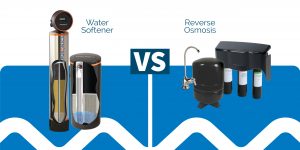
It depends on your needs. While a reverse osmosis system will soften water in addition to filtering it, constantly filtering hard water will wear out an RO membrane faster. While a reverse osmosis system can replace a water softener, it will waste a lot of water, so water softeners are often a more economical solution if your water has a hardness problem. If your water has a strange taste or smell due to contaminants beyond minerals, you may need a reverse osmosis system or other filtration system to fully filter the water.
Can I Use Both of These Systems?
Absolutely. In fact, a water softener will protect the reverse osmosis membrane and make it last longer. The water softener will soften water throughout your home, providing benefits for your pipes, appliances, fixtures, skin and hair. The reverse osmosis system can be installed under a sink to provide purified water at a separate tap for drinking and cooking. Depending on what’s in your water, you may need an additional whole-house system to treat other contaminants.
Ready to improve the water in your home? Request a free consultation and quote.
What are the Benefits of Using a Water Softener?

- Clearly refreshing® water
- Water-using appliances last longer
- Dishes are cleaner
- Skin and hair are soft and silky
- Save money and time on cleaning
- Virtually eliminate water spots
- Prepared food and beverages taste better
What are the Benefits of Using a Reverse Osmosis System?
 Better tasting water – RO systems reduce contaminants that can make your water taste or smell unpleasant.
- Environmentally-friendly – Enjoy bottled water quality without the plastic straight from your kitchen sink.
- Crystal clear water – The process of reverse osmosis reduces salt, minerals and many other contaminants, leaving you with pure water.
- Healthier water – RO systems reduce contaminants that are associated with a variety of health problems.
Is Reverse Osmosis Water Hard or Soft?
As stated above, a reverse osmosis filter will soften your water – at the cost of wearing through the filtration membrane faster. While reverse osmosis filtered water is soft, many homeowners install a whole-home (not a point-of-use) water softener to soften water before it is filtered by reverse osmosis, as this reduces maintenance costs throughout their homes.
What Makes Puronics Water Softeners Different?
Puronics Chlorostatic® water softeners reduce chlorine and chloramine as well as soften your water, improving the taste and smell of your water. Our systems also utilize the advanced technology of the iGen®… the valve so smart it does the thinking for you to monitor your water to optimize water quality and operating efficiency.
How can I Purchase a System?
If you know what system you want, you can request a quote or contact your nearest dealer. If you’re not sure, you can request a free water treatment consultation, and you’ll receive a personalized quote based on our recommendation.
If you have any other questions, please feel free to contact us today! We’re happy to assist you with your water treatment needs.
Puronics® water treatment systems include technologies such as water softeners, water filters, micro-filtration, ultra-filtration, bacteriostatic carbon filtration, reverse osmosis and ultraviolet disinfection. Companies use Puronics® products for pre-treatment of boilers, hot water heaters, dishwashers and steam-handling equipment as well as other water using appliances. Companies also use Puronics® drinking water filtration systems as a replacement to bottled water.